SIST TIMES 2025 is out now.......

Killing a muse
What defines an ideal chilld?
Dr. Moiz Bajwa (Advisor SIST 2025)
1/12/20263 min read
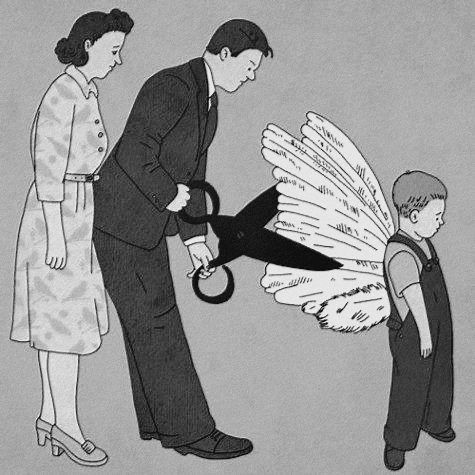
Killing A Muse; The Death of Dreams
What defines an ideal child? Is it the one who fulfills their parents’ dreams? Makes them proud? Does what his/her parents couldn’t? Becomes a mini-version of their parents or teachers? this is what we, as a society, believe defines an ideal child. Let’s pause and dig deeper.
If a child does the same as its parents then where’s the space for its individuality, where is the creativity? Where is its own self?
Today’s generation is born in a world which is a global village. In a time of endless researches, new innovations, artificial intelligence, and robotics. Unlike the one, which was even few years ago, a life which was simple, a life where we had only limited professions, a life where the competition to survive in the society was way less than what is today. There is marked generational gap between parents and children nowadays. Parents usually forget that the struggles have been changed, the professions and types of businesses which once ruled the society have been changed. Parents usually view the world through the lens shaped years ago and apply the outdated, and generalized rules to their children’s lives which really creates a sense of not belonging and confusion in the young, naïve minds. Rumi is often attributed to have said,
“Don’t try to understand children through your eyes, try to see the world through theirs.”
Two things must be finely differentiated in parenting; Love and Control. Love is usually unconditional and it nurtures, listens, and respects the boundaries. It says “I want what’s best for you, even if it’s not what I imagined.”
Control, on the other hand, is driven by fear, fear of failure and judgment. It only dictates. It says, “Do what I say because I know better… always.” When intermixed, there is a mess. Sometimes, out of love, there arises over-possessiveness, which really curbs the freedom of children, freedom of thoughts, goals, and actions. The result? A child who may appear obedient on the outside, but is silently suffocating on the inside.
Every child is unique in its personality, thinking, and abilities. Some may be gifted painters; others might sing with soul. Some write poetry that touches hearts, while others may shine in academia.
But we often make the mistake of placing all children on the same plate, judging them by the same standards, and forcing them into a rat race where success is narrowly defined, usually by titles like doctor or engineer. As famously attributed to Albert Einstein:
Everybody is a genius. But if you judge a fish by its ability to climb a tree, it will live its whole life believing it is stupid.
When we pressurize a child to become a cardiologist who might have been a brilliant actor, we don’t just change a path, we kill a character.
When an artist is made to compete as an engineer, a muse dies.
And when a singer is told to stay silent, some melodies are lost forever.
Imagine if Azam Siddiqui had forced his son to pursue law, his family would have gained a lawyer, yes, but the world would have lost Babar Azam, the elegant batter.
If Atif Aslam had stuck to software engineering, songs like Aadat and Hona Tha Pyar would never have existed. Just imagine how monotonous and colorless the world would be if we continued to kill the individuality of children in the name of stability and tradition.
If we continue to pressurize our children to fulfil the dreams which we couldn’t in terms of career, goals, and ideas, the pressure of living someone else’s life would instill psychological problems like anxiety, depression and self-doubt. That so-called ideal mini-version of a parent or teacher may appear perfect for a while, but sooner or later, it breaks, and in the process, loses its own soul.
Even centuries ago, Hazrat Ali (A.S.) captured this reality with timeless wisdom:
“Do not force your children to behave like you, for they were created for a time different from yours.” It’s a powerful reminder that parenting is not about cloning; it’s about guiding someone through a world we may not fully understand.
Parenting is not about molding a child into your own version, forcing them to believe what you believe, or making them live your unfulfilled dreams.
It’s about listening — not to reply or correct, but to truly understand.
It’s about empathy — learning to see the world through those naïve, curious, and innocent eyes.
It’s about trust — in your child’s abilities, in their voice, and in their strength to grow.
Most importantly, being a supportive parent doesn’t mean stepping back entirely — it means offering guidance with open hands, not with clenched fists. I would want to conclude this painful topic by some of the beautiful lines from an unknown Urdu writer who wrote these lines for his son:
میں تمہاری آنکھوں سے وہ زمانے دیکھوں گا جو ابھی نہیں آئے
میں تمہارے پاؤں سے تیز تیز بھاگوں گا ایسی شاہراہوں پر جو ابھی نگاہوں سے مثلِ خواب اوجھل ہیں
میں تمہارے ہاتھوں سے وہ پہاڑ چھو لوں گا جس کو سوچ کر بھی اب سانس پھول جاتی ہے
وہ پہاڑ، وہ راستے جن پر تم کو جانا ہے، وہ نیا زمانہ ہے اور وہ تمہارا ہے
میں اُس زمانے کو دیکھ بھی نہ پاؤں گا
لیکن اُس زمانے کی ہر گھڑی کو، ہر پل کو میری آنکھیں دیکھیں گی
اُن چمکتی آنکھوں سے جو تمہاری آنکھیں ہیں
میں تمہاری آنکھوں میں پیار بن کے رہتا ہوں، نور بن کے بستا ہوں، خواب بن کے زندہ ہوں
بیٹے کے نام -